
Reported by the press, with its sources.
GTA VI: Bloomberg’s investigation explains Rockstar’s development choices
Project Americas, Jason and Lucia in the open world, residents and delays: Bloomberg’s account of GTA VI’s production, cross-checked with Rockstar and explained with its limits.
By Alexandre BONGRAND

Project Americas: understanding the original ambition
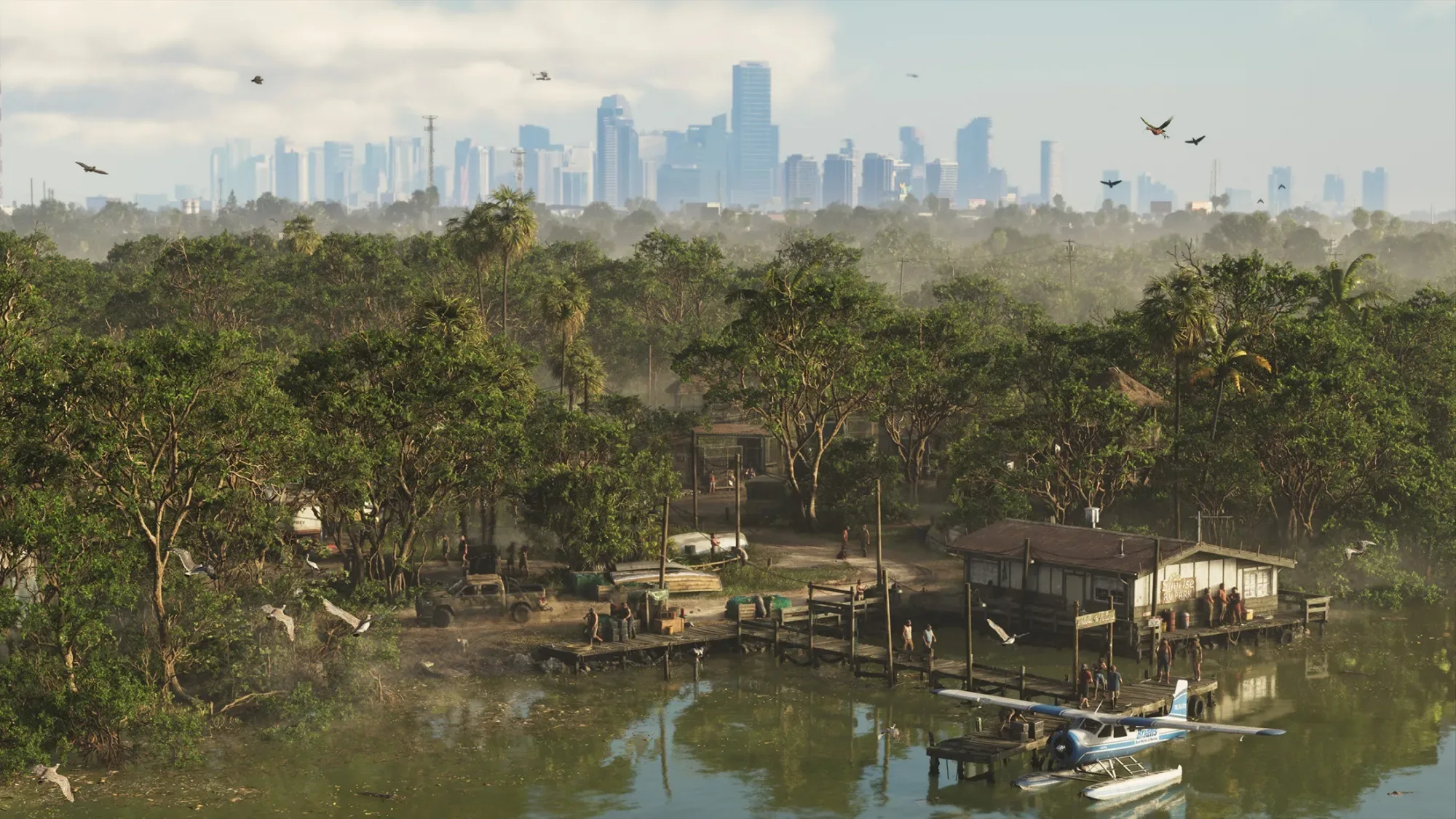
Why has GTA VI taken so long? In The Making of Grand Theft Auto VI, published October 14, 2026, Jason Schreier approaches that question from inside Rockstar North. The Bloomberg Businessweek reporter visited Edinburgh in late September and interviewed several project leaders. His reporting connects two challenges: building Leonida and adapting the company needed to produce it.
The working title Project Americas reflects an early ambition broader than the setting now being presented. According to the report, an initial Miami research trip took place in 2015, when the project envisioned large areas across North and South America. Its scope was subsequently narrowed to Miami and its surroundings, reimagined for GTA VI.
That development history should be distinguished from the map you will explore. An old concept does not promise a second launch map or a South American expansion. For the current setting, Rockstar presents Vice City and the state of Leonida. Our GTA VI overview collects the useful reference points without merging those stages of the project.
Development does not move in a straight line. The report describes teams moving between company priorities, a story framework established by late 2019, and a prolonged period when the game’s components had not yet become a convincing whole. The pandemic and the suspension of performance capture added further constraints. Early research therefore does not equal years spent polishing an already fully defined game.
This helps frame the rest of the story. Scale is not measured only in square miles. It also appears in the behaviors to produce, animations to coordinate, and interactions that must work together.
Jason and Lucia: making a couple work between missions
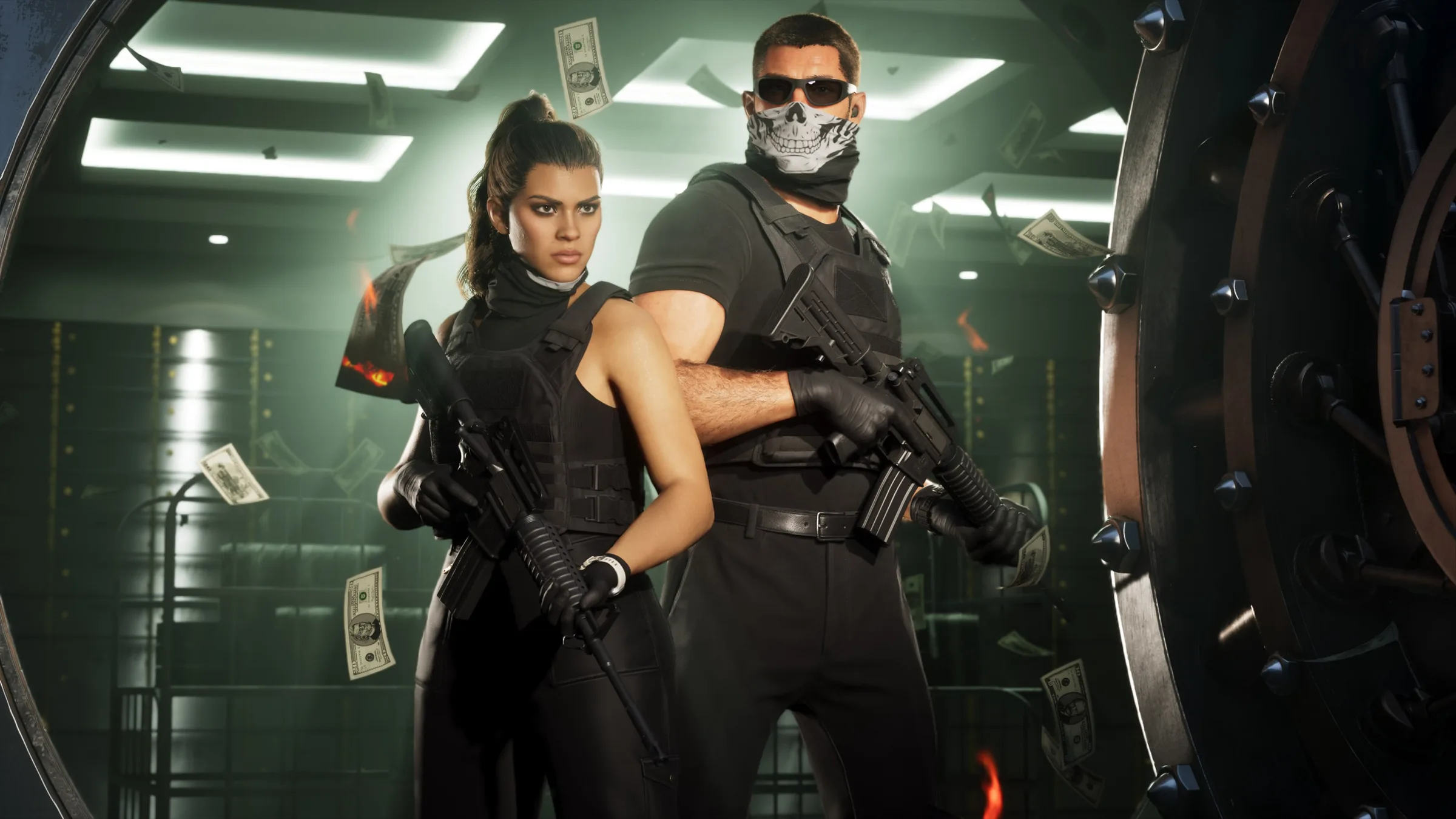
Perhaps the most interesting player-facing detail concerns what happens between objectives. Schreier describes a system that lets Jason and Lucia meet up in the open world. While controlling Jason, the player can text Lucia to ask her to join him. The report then describes them walking hand in hand through a park and talking about a family memory.
The presentation provides other examples: visiting the gym together, with Lucia on a treadmill and Jason doing squats, followed by a store robbery and an escape from the police. Their conversation and banter accompany these situations. The aim extends beyond placing two protagonists in a cutscene: their shared presence must also work during travel and activities.
What this helps explain. From a design perspective, a companion adds questions to almost every action. Where do they stand, how do they follow, when do they speak, and how do they react to an unexpected event? That reading explains the workload discussed by the developers; it is not a list of behaviors all confirmed for the commercial release.
It would be excessive to infer that every activity always supports both characters, that Lucia instantly answers every message, or that another human player can take her place. The report does not describe a cooperative mode. It shows how Rockstar is working to make the pair believable within the adventure.
Our encyclopedia explores these distinctions through its Characters, Activities, and Mechanics sections. The entries retain their press attribution and the limits of what was described, rather than presenting the visit as our own hands-on session.
Residents: a crowd requires a production pipeline
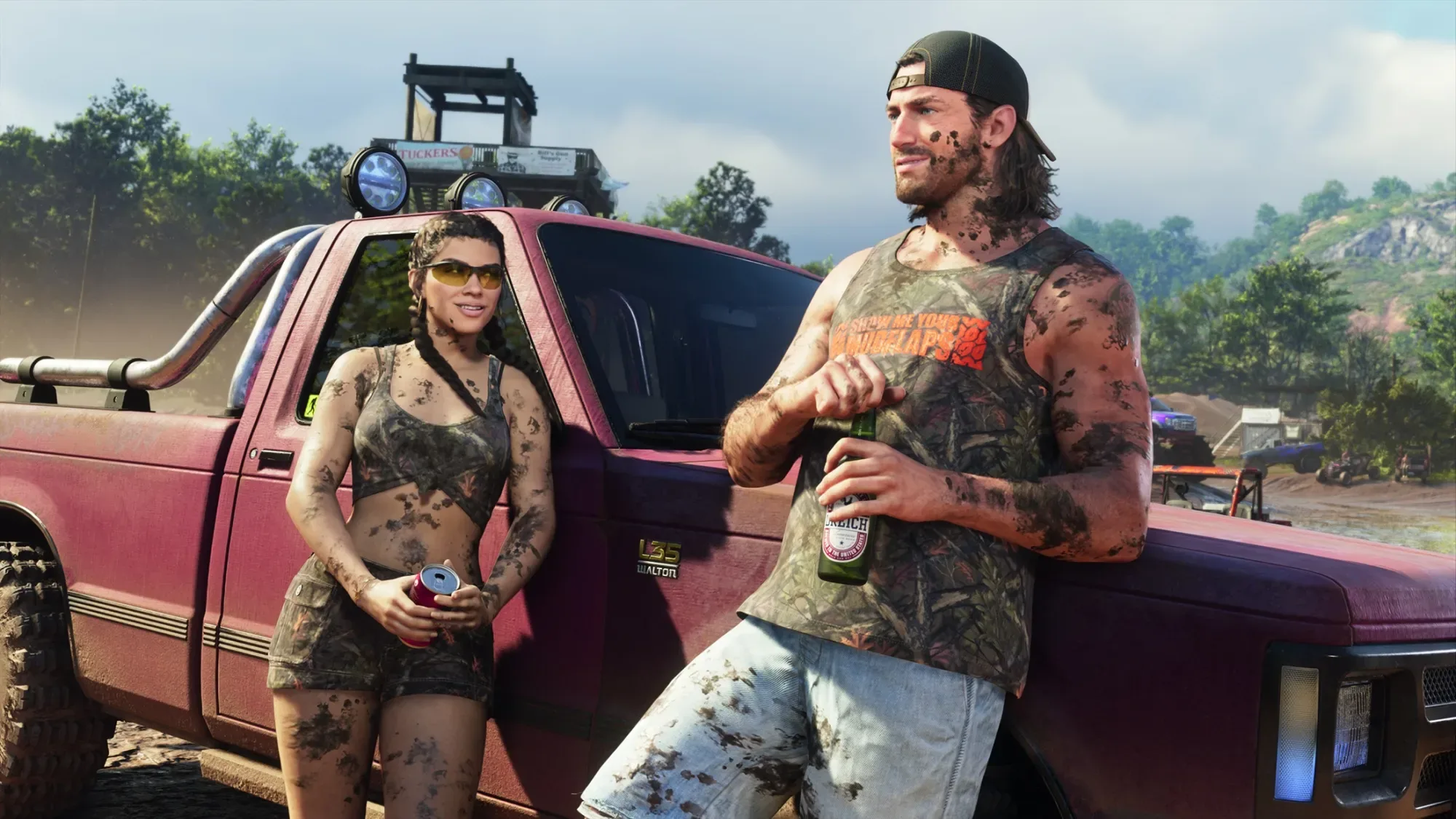
The investigation also offers a view of the work behind non-playable characters, or NPCs. Aaron Garbut uses a club as an example: patron animation and behavior, drinks, music, lighting, and synchronization all need to come together. The setting alone is not enough; coordinating those components helps make it feel inhabited.
Bloomberg describes a Los Angeles studio bringing together writers, producers, and directors dedicated to these characters. This supplements the ambient dialogue work already discussed in our encyclopedia. NPCs emerge as a writing and performance workload, rather than simply more silhouettes to display.
Reading a workforce figure at the right scale. Figures supplied by Rockstar to Bloomberg put the company’s workforce at 2,441 in 2018 and 4,711 across 12 offices in the August 2026 snapshot. Those 4,711 employees are not a count of people assigned exclusively to GTA VI. The figure covers Rockstar and its different roles.
Neither that growth nor the studio’s creation reveals the number of unique NPCs, total dialogue length, or proportion of accessible buildings. The investigation does not provide those quantities. The screenshot accompanying this chapter illustrates the world’s residents; it does not show the club presentation Garbut describes.
You can also explore our media gallery to examine images published by the developer without reading additional promises into them. Visible details and developer statements are complementary kinds of evidence, each with its own limits.
An open world that can pull you away from the objective
Phil Hooker recalls playing a development build when a collision with another driver triggered a succession of incidents, resident reactions, and improvised decisions. Two hours later, he still had not reached the mission he was supposed to check. We retain the central point rather than turning every step of his account into a guaranteed feature.
This is a developer’s anecdote. Schreier reports Hooker’s recollection; it is neither a two-hour session played by the journalist nor a route every player will reproduce. An incident described in an interview does not establish how frequently it occurs or whether it triggers systematically.
The example is interesting because an open world can create diversions when several systems respond to one another. A traffic reaction attracts attention, an encounter changes the player’s priority, and an escape leads elsewhere. Connections between situations can make exploration unpredictable, without requiring a quest written to follow that exact chain.
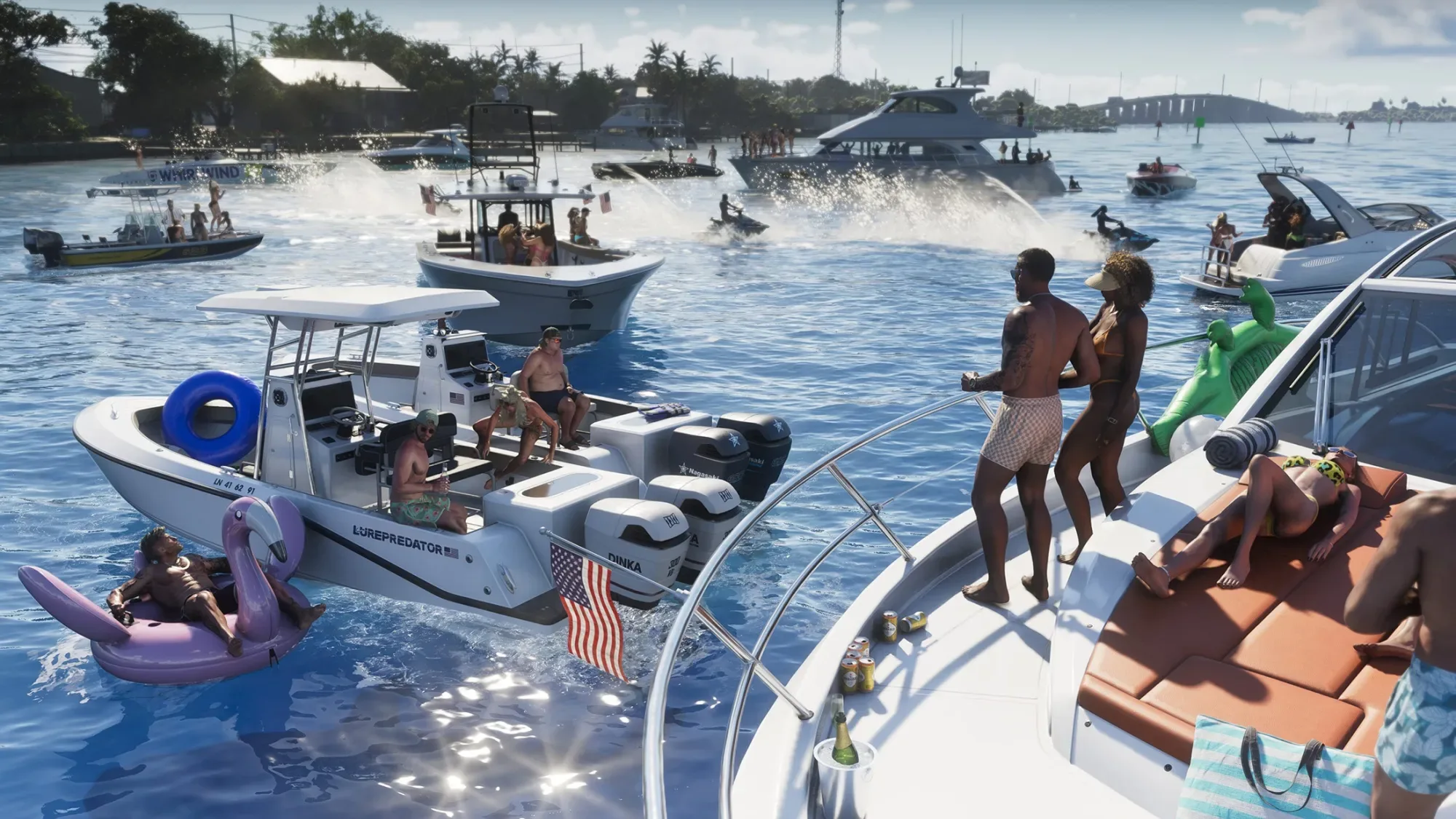
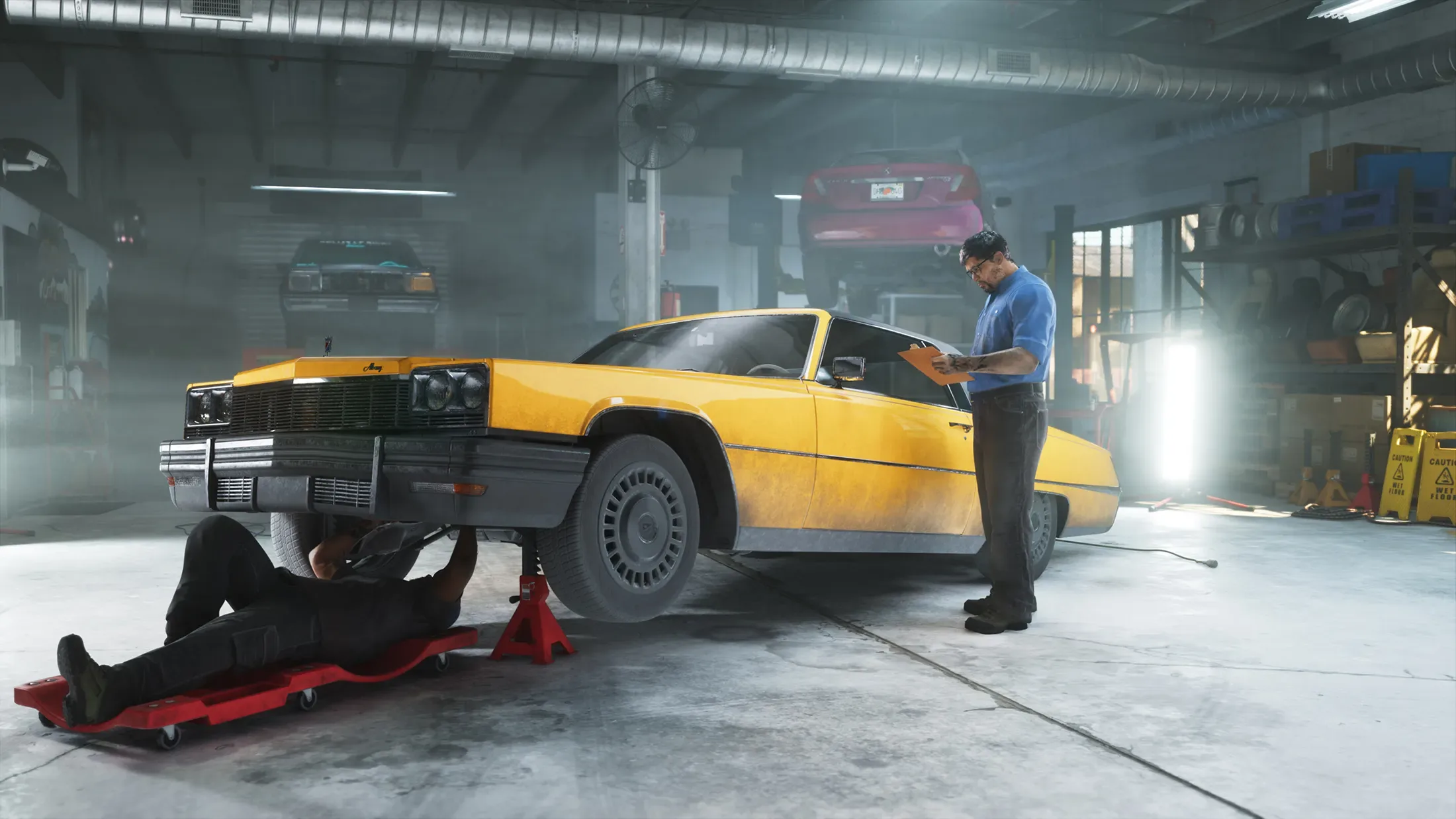
The distinction also matters for footage and screenshots. A dense crowd, a gathering on the water, or a busy garage offers an impression of GTA VI’s world; none independently reveals the simulation rules behind it. The images in this feature remain credited illustrations, rather than being presented as screenshots of every incident recounted.
For more on the subject, our article about the extra details Schreier shared covers a later appearance. It is separate from the October 14 investigation: the two publications should not be merged into a single visit or a series of Rockstar announcements.
Behind the delays, a company rebuilding its processes
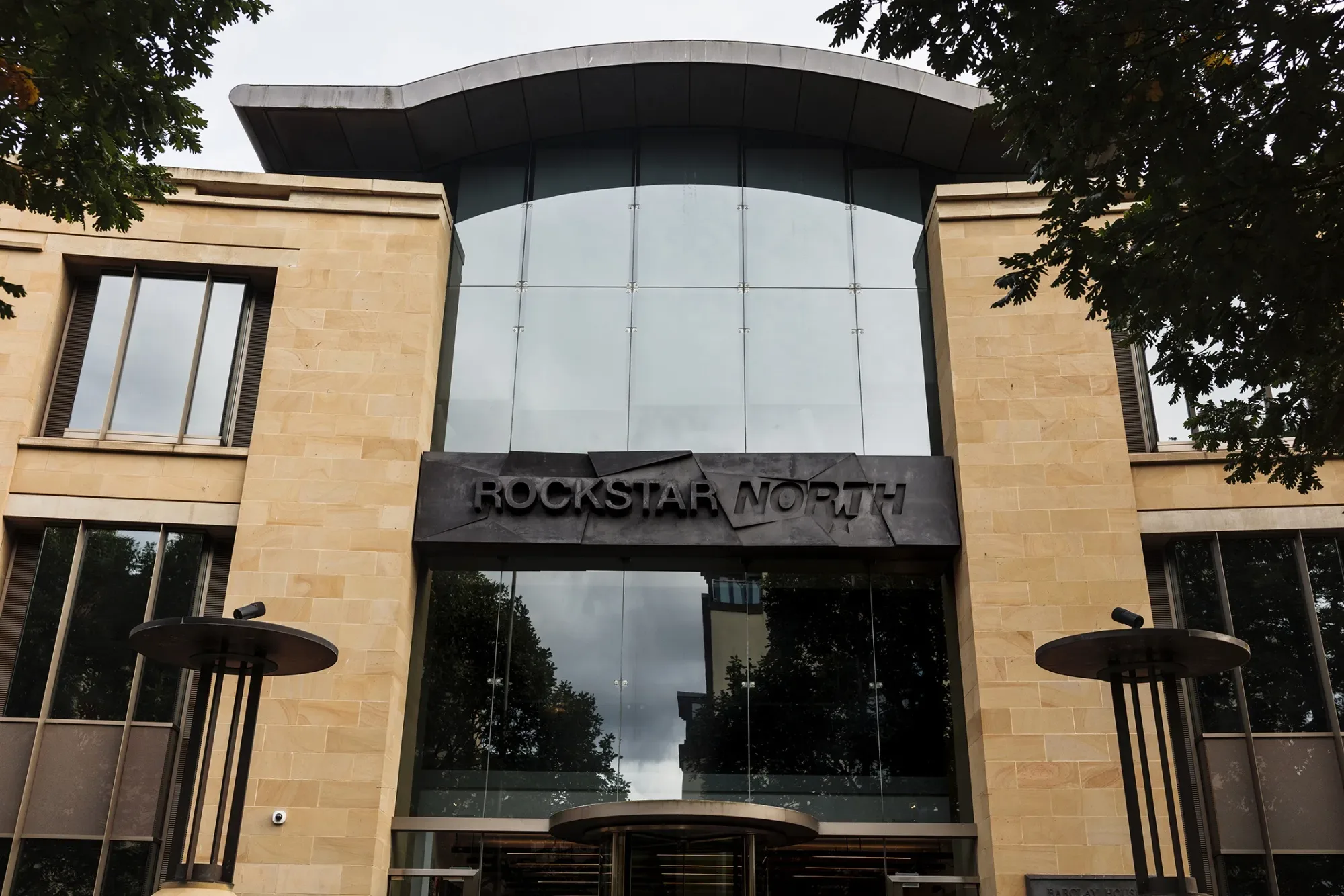
The report’s other major thread concerns production. Rob Nelson, Aaron Garbut, and Phil Hooker hold development leadership roles, while Jennifer Kolbe describes production and scheduling decisions. This shared leadership structure has to coordinate teams that have become substantially larger.
In their explanations to Bloomberg, the delays do not come down to one dramatic event: several parts of the project were not reaching the expected standard on schedule. The capacity to produce the intended residents is among the difficulties discussed. That explains a production decision, without allowing every month of delay to be attributed to a single system.
The public schedule remains the verifiable reference. Rockstar initially announced 2025, then May 26, 2026, before settling on November 19, 2026. Its November 6, 2025 statement explained that the extra months would go toward finishing the game. The game’s website still displays that date as of our October 21, 2026 update. It remains an announced date, rather than a guarantee we can make on the publisher’s behalf.
The investigation also examines working conditions. Kolbe describes scheduling changes and compensation for additional hours, while acknowledging that experiences can vary between teams. Treating those remarks as proof that crunch has disappeared entirely would be inaccurate. The five-day office policy, which management explains in security terms, also remains controversial.
The dispute surrounding dismissals involves opposing positions. The IWGB’s statement about the hearing sets out the union’s allegations; Rockstar defends an explanation involving confidentiality, which the affected workers dispute. This feature does not adjudicate that disagreement or present either side’s allegations as a judicial finding.
Firm reference points and questions still open
Release and platforms. Rockstar’s website lists November 19, 2026, PlayStation 5, and Xbox Series X|S. Those are the launch details retained here. Reading the investigation adds neither a PC date nor another release schedule.
Budget. The investigation does not disclose an exact figure. Headcount, development duration, or comparisons with a major construction project are not a reliable way to calculate it. We therefore do not present spectacular estimates as GTA VI’s confirmed production cost.
Shopping and cooking. Nelson discusses everyday actions: picking up beer, paying at a register, preparing a sandwich, and potentially gathering ingredients. The examples explain the tension between realism and convenient play. The text does not identify the final implementation. Inferring mandatory grocery trips, a precise payment animation, or an entire cooking system would go beyond the source.
Online and what comes next. Bloomberg’s mention of a possible 2027 online release is a press expectation. This feature does not turn it into a Rockstar announcement. The leaders also hope to reuse GTA VI’s tools and accumulated expertise to work faster afterward. That is an intention, without a detailed public schedule to infer from it.
How to read this feature. Bloomberg links lead to the original investigation; Rockstar links let you check the current public information. Our entries distinguish what the reporter describes, what a leader recounts, and what remains unconfirmed. The office photograph is by Robert Ormerod for Bloomberg Businessweek; the cover artwork and four screenshots in the investigation were supplied by Rockstar. The image of the protagonists comes from the developer’s media page.
You can continue with our album feature and listening links, or find further reporting in GTA VI news. The investigation is valuable for understanding how the game is being made, with its examples, attributions, and unresolved questions kept in view.
Sources
Keep reading

Source: GameRantCredit: Rockstar Games via GameRant (28/11/2026) GTA VI: Novak Watch heist at Rococo Rich (code 5853), Vangelico Ring for Yasmani (1282 and 2407), selling DaCity Coin at $5.05 ($25,250), and 6 race types
Three November 28 GameRant guides break down infiltrating Rococo Rich in stealth for the Novak Watch (code 5853), robbing Kowalski (1282) and Skala Diamonds (2407) for Yasmani’s Vangelico Ring, and selling 5,000 DaCity Coins at their $5.05 peak ($25,250), alongside TheGamer’s 6 race types.
Source: DexertoCredit: Rockstar Games via Dexerto (27/11/2026) GTA VI: Ned Luke defends Lucia against “woke” claims, Evelyn Stone’s Deep Roots memorial, storm chaser Reed Timmer on hurricanes, and Metacritic score
Speaking with Dexerto and TheGamer, 2013’s Michael De Santa actor Ned Luke defends Lucia Caminos against “woke” claims targeting Grand Theft Auto VI, while Polygon contrasts the 99/100 Metacritic score with 53,754 negative user reviews, Bradley Stone honors his daughter Evelyn at Deep Roots, and Reed Timmer praises hurricanes.
Source: PC GamerCredit: Rockstar Games via PC Gamer (28/11/2026) GTA VI: “surreal” launch per Rob Nelson, real tradespeople roast Jason’s DIY repairs, Criminal Profile as an RPG system, and Vice City clubs
Rob Nelson admits that even Rockstar North veterans felt like launch day might never arrive, while real-world roofers and drywallers dissect Jason’s Key Lento home repairs, IGN reframes the Criminal Profile as an RPG class system, and PC Gamer praises Vice City’s Big Three nightclubs.