
The team's reading, backed by the sources below.
GTA VI: Digital Foundry examines the PS5 launch trailer and 30 fps target
Digital Foundry breaks down the Grand Theft Auto VI Launch Trailer captured on base PS5: RTGI lighting, hybrid reflections, and the 30 fps target confirmed by Rob Nelson.
By Alexandre BONGRAND
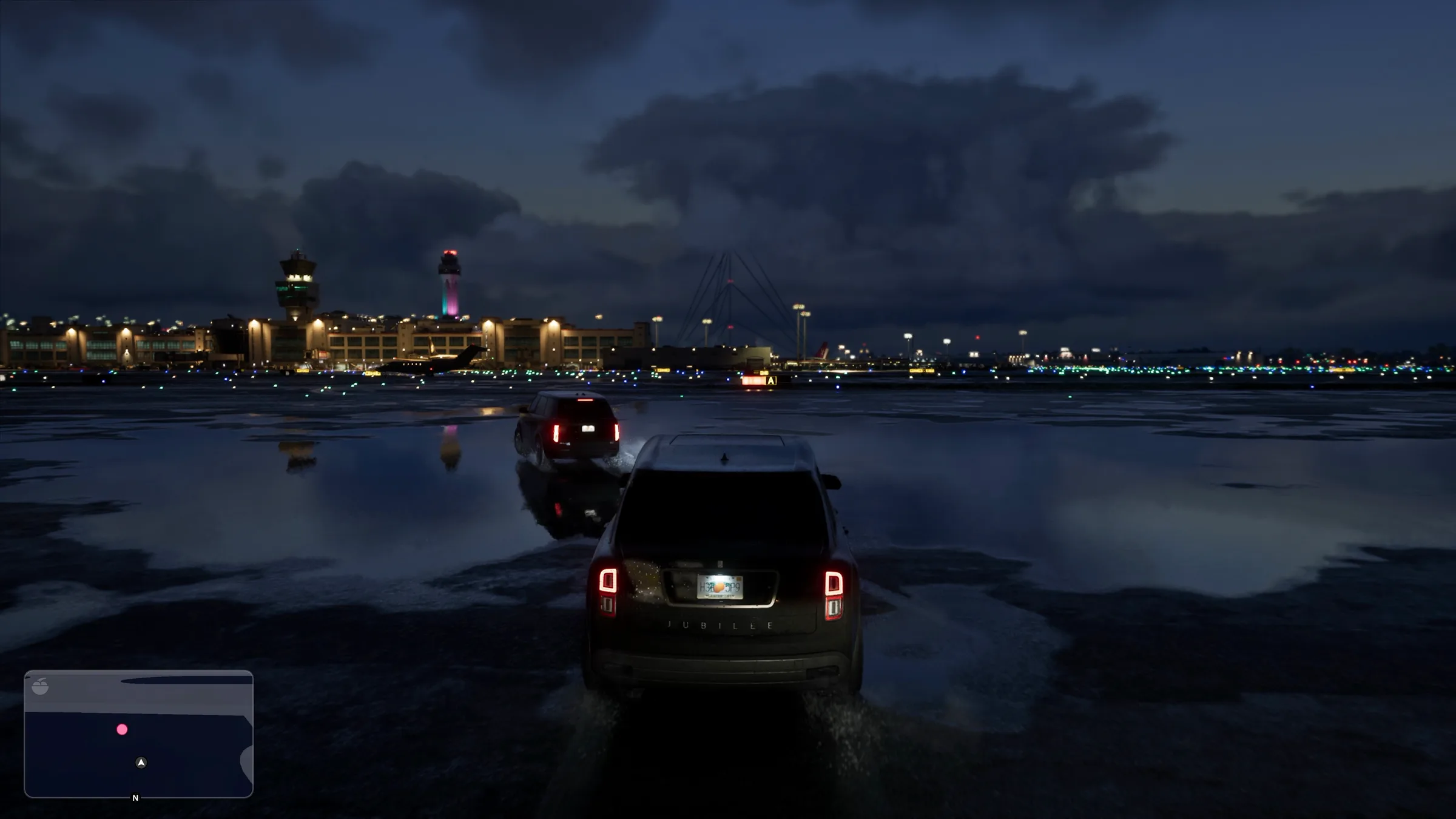
Real-time ray tracing and RAGE engine upgrades on base PS5
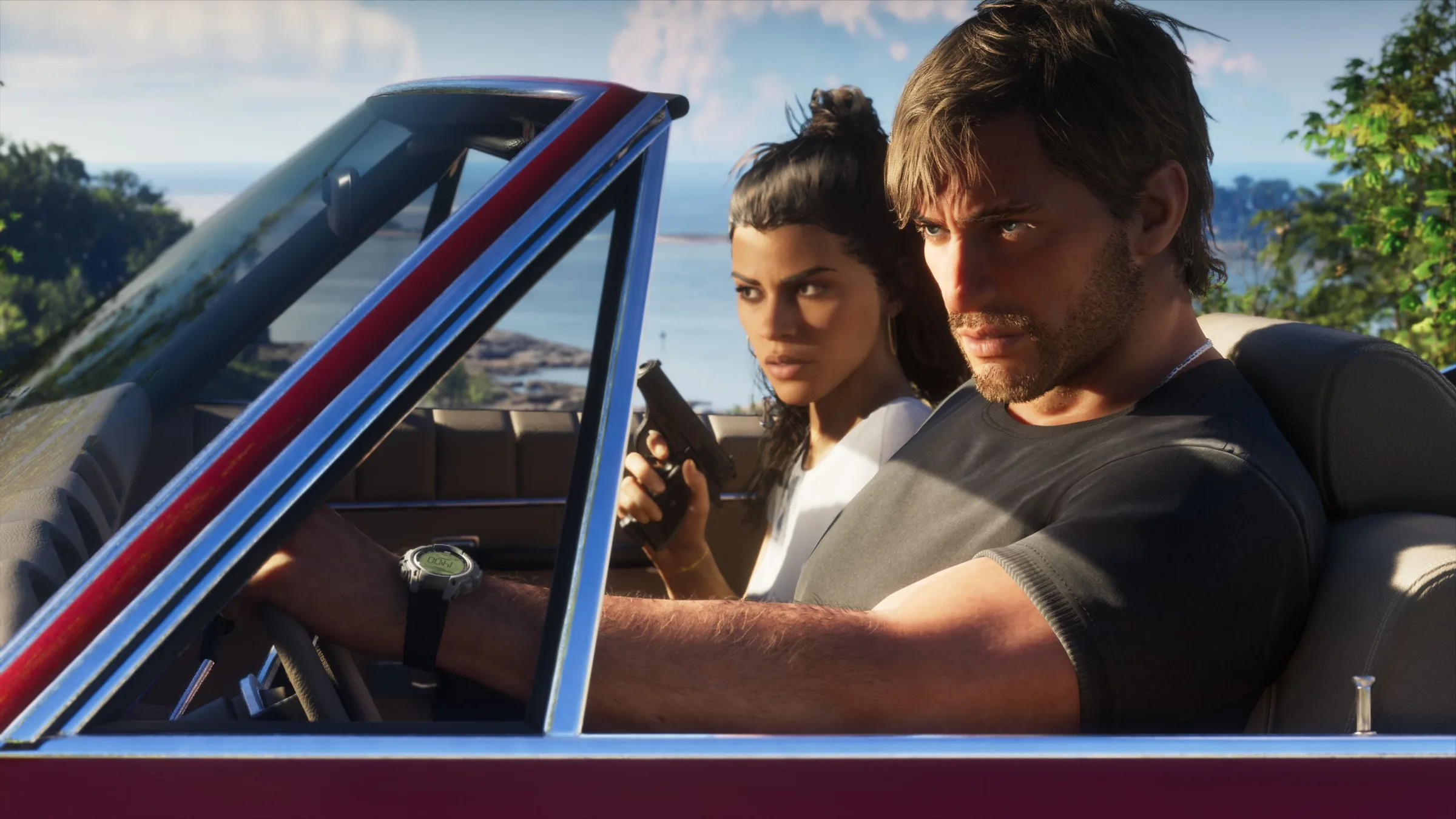
Released right after the official Grand Theft Auto VI Launch Trailer, Digital Foundry’s frame-by-frame technical breakdown starts with a crucial baseline: just like Rockstar’s PS5 capture confirmation for Trailer 2, every shot broadcast on October 15, 2026 runs on a standard PlayStation 5 rather than a PS5 Pro. Even on base hardware, side-by-side comparisons against earlier trailers reveal cleaner image reconstruction across Vice City’s neon boulevards and the Grassrivers wetlands.
The analysis highlights real-time ray-traced global illumination (RTGI), which bounces tropical sunlight and pastel neon signage across interiors, car hoods, and character skin tones without screen-space glow artifacts. Hair strands and dense foliage—which showed mild upscaling shimmer in May 2025 footage—now appear noticeably sharper, as you can inspect across our GTA VI media gallery.
Why Rockstar targets 30 fps at launch and where a 40 fps mode fits

Driving that level of environmental physics and autonomous crowd behavior carries a direct CPU cost. As reported by TechRadar following press briefings with Rockstar North co-head Rob Nelson, Grand Theft Auto VI targets 30 frames per second at launch on November 19, 2026 across PlayStation 5 and Xbox Series X|S. The studio’s rationale is straightforward: cutting CPU overhead to chase 60 fps would require scaling back the traffic density, weather systems, and NPC routines detailed on our GTA VI hub.
Both Digital Foundry and TechRadar note, however, that 120 Hz displays with VRR open the door to a balanced middle ground, especially on PlayStation 5 Pro. A 40 fps presentation—delivering a 25-millisecond frame time, exactly halfway between 30 fps and 60 fps—would noticeably improve controller responsiveness without requiring double the CPU budget.
Sources
Keep reading
Source: PC GamerCredit: Rockstar Games via PC Gamer (28/11/2026) GTA VI: “surreal” launch per Rob Nelson, real tradespeople roast Jason’s DIY repairs, Criminal Profile as an RPG system, and Vice City clubs
Rob Nelson admits that even Rockstar North veterans felt like launch day might never arrive, while real-world roofers and drywallers dissect Jason’s Key Lento home repairs, IGN reframes the Criminal Profile as an RPG class system, and PC Gamer praises Vice City’s Big Three nightclubs.
Source: GameSpotCredit: Rockstar Games via GameSpot (28/11/2026) GTA VI: all 20 Randy Wish List cars, disabling Advanced Trackers via the Mamba GT, Style Magazine locations, and Port Gellhorn’s $3,000 encounter
Guides published on November 28 catalog all 20 luxury cars on Randy’s Chapter 3 Wish List, explain how stealing the Mamba GT in Chapter 4 permanently unlocks Advanced Tracker vehicles at Pay ’n’ Spray garages, map out all 29 Style Magazines for Jason and Lucia, and break down Raul Bautista’s fate alongside a $3,000 encounter near Port Gellhorn.

Source: GamesRadar+Credit: Rockstar Games via GamesRadar+ (27/11/2026) GTA VI: all 6 permanent stat upgrades (Mill Station, Kyle), 11 meditation spots, $2M BuckMe savings perks, and Silent Hill Easter egg
Guides published on November 27 and 28 map out the experimental syringe at Mill Station Radar Base, the mutated strawberry at McKittrick Farm, how 11 meditation spots add up to 18 sessions, the perks tied to depositing $2,000,000 into BuckMe Family Savings, plus Top Fun drone time trials and the Silent Hill tribute inside Crosstown’s Marbelle Hotel.